

Sermons
 It’s only fitting that we hold services of healing this weekend as the wider church celebrates Luke, who is not only remembered as an influencer of one of our precious Gospels in Scripture, but as a beloved physician. Granted, beyond the briefest reference to it in Colossians, we do not know much of anything about Luke in that role. And maybe that just adds yet another rather fitting layer to this weekend, as we take time to not only offer whatever we as the church can do for healing, but that we also take time to give thanks for those who do their immensely important part in sustaining and restoring our personal health, many of whom go through their medical tasks without much notoriety, and simply because they remain firmly committed to patient care. They remain committed to us.
Oddly enough, in the ministries of the church, we are often called to hospitals and nursing homes and rehab centers: to places where those we visit, wish to be almost anywhere but there. They yearn to return home. They want to get away from people in scrubs constantly coming in and out of their room all hours of the day and night. They’re tired of the beeping and all the annoying noises from the hallway. And then, there’s turnover in staff. Not to mention, there isn’t always the quickest response time to call lights. And then, some mistakes are inevitably made with these human beings with RN and MD and PA attached to their names. And sometimes those moments tend to overpower our memory over all the other times that they did their part for our healing and for personal hope to be ultimately fulfilled. If we receivers of such care are brutally honest with ourselves, sometimes perfection is not only expected, but demanded from us patients; and yet, those associated with any form of medical care given must respond with their own patience and kindness and compassion through it all. In other words, no pressure whatsoever.
And so I wonder, as those of us of the church enter into such places where we feel called to share the Gospel of love and mercy and compassion with those enduring pain and frustration, I wonder if sometimes the people wearing the scrubs are just as much the proclaimers of the Gospel as those who might be wearing the clerical collar. Because the nurse is expected to treat each patient regardless of faith tradition, or hometown, or how well they listened to guidance from previous medical visits; the nurse is called to treat each patient with the same dignity, as if they were, in fact an absolutely precious child of God. The physical therapist is expected to approach every room with an endless supply of patience and kindness, knowing not everyone will be quite as eager to take on the exercises; not everyone will be eager for the work to be done not just for personal well-being, but to also benefit others who are worried about their loved one’s progress. The physician must be willing to stand in the face of questions, perhaps even ridicule, as some individuals and their families are empowered by the intelligence of Google and AI and WebMD. And still, the physician must feel a further empowerment to never give up on caring for absolutely anyone who shows up in their office or in a hospital bed. Yet, more often that not, as with the beloved physician in Luke, when they somehow rise to such occasions with unfathomable kindness and compassion and dedication, their stories may never be recorded.
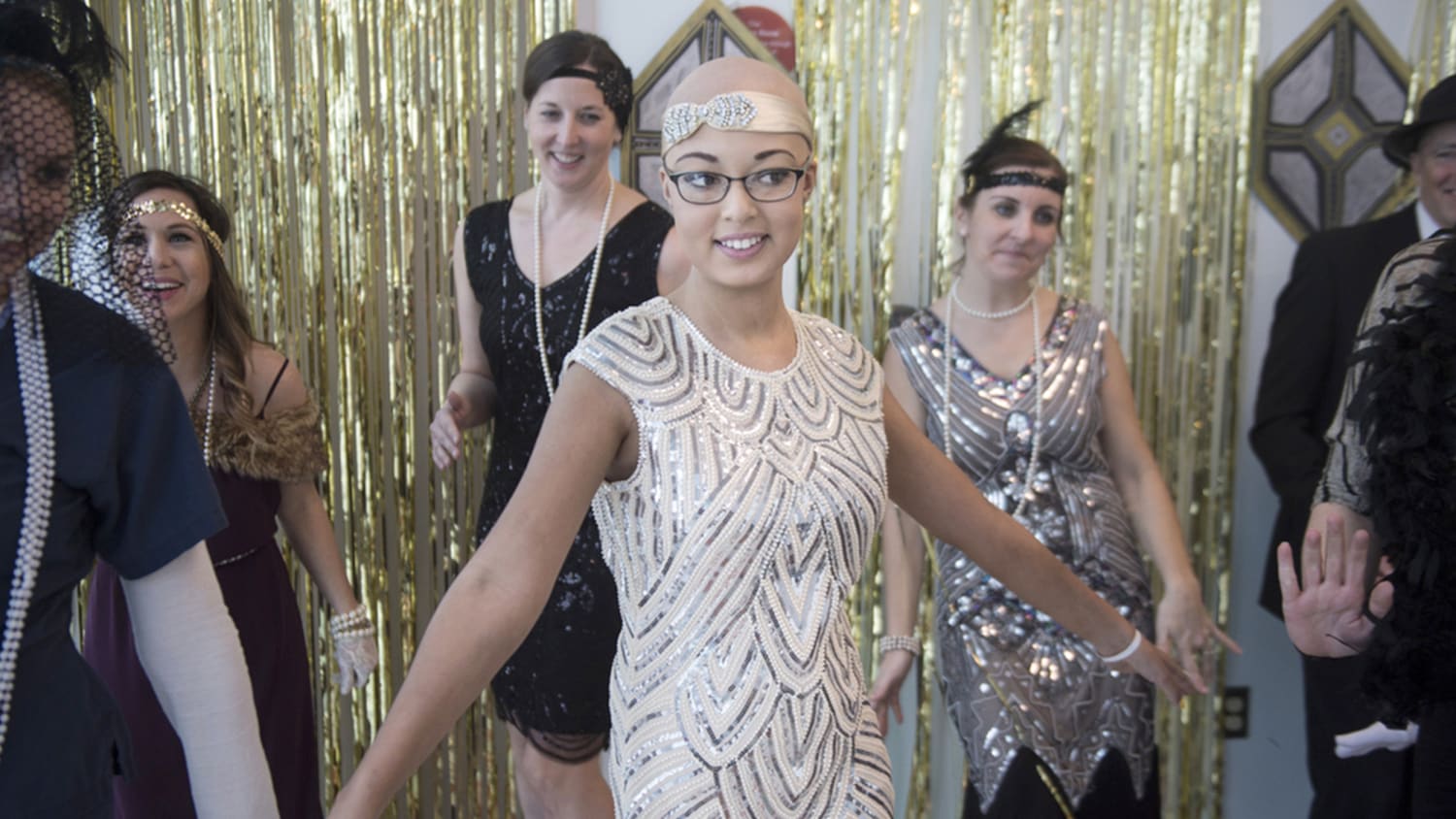
Except, one that has always pulled at my personal heartstrings was about a young woman named Corinne, who was in and out of the hospital during her senior year of high school after recovering from a bone marrow transplant. And then, amidst further complications, she was admitted to a much lengthier stay, leading her to miss many senior year milestones. Prom was about to be next. And so, the hospital staff went to work. Word got out that Corrine was a fan of F. Scott Fitzgerald’s The Great Gatsby. So, plans were made for the Roaring ‘20s style of decorations. Someone donated a flapper dress for her to wear. Another did so with a vintage Cadillac limo for Corrine and her mother to ride around the medical campus. With her weakened immune system and so not being able to be surrounded by much of a crowd, Corrine got to hand-deliver ten invitations to the people she came to cherish at that hospital, including the transplant doctor. As they said, they did everything they could to “normalize an abnormal experience” for Corrine, and maybe a make-shift prom night offered its own most powerful form of healing: to convince a teenage girl who was missing out on everything a teenage girl would experience, that she was worth all the extra time and energy and love to bring a life-shaping memory to fulfillment.
That, of course, is not the only story. Numerous other scrub-wearers and the like have gone above and beyond their job description to help patients experience a precious glimpse of God’s love that no pain or frustration is ever meant to stop. And so, this weekend, as we do our part to offer whatever we can as the church for healing, for whatever is brought into this chapel/sanctuary, we also recognize the other forms of healing and the people behind them, who are thoroughly depend on in this world. We not only recognize, but give thanks for, and lift up, and offer our blessing to physicians and nurses and therapists and all those called to care for absolutely anyone who comes into their midst; and so, end up being just as vital proclaimers of the Gospel itself; that no form of pain or frustration or fear is ever meant to separate us from the love of God in Christ Jesus, our Lord. So, for all those who do their part to bring that Greatest News to life, we most certainly give thanks to God, indeed! Amen!
For more of the story about Corrinne Bass, please visit:
https://www.today.com/health/hospital-throws-teen-great-gatsby-themed-senior-prom-patient-t110302